Short-circuit loss and leakage flux loss are two important types of energy loss during transformer operation, significantly affecting the transformer's efficiency, temperature rise, and operational stability. The following is a detailed explanation:
1. Short-Circuit Loss (Copper Loss)
① Definition:
Short-circuit loss refers to the power loss generated inside the transformer when the secondary side is short-circuited and the rated current is applied to the primary side. It is mainly caused by the resistance of the windings, and is therefore also called copper loss (because the windings are usually made of copper).
② Characteristics:
a. Directly proportional to the square of the load current:
Short-circuit loss Psc = I²R, where I is the load current and R is the winding resistance. When the load increases, the current increases, and the copper loss will increase significantly.
b. Variable loss:
Short-circuit loss varies with the load. At no load (I=0), the copper loss is zero, and it reaches its maximum value at full load.
c. Measurement method:
Measured through a short-circuit test: The secondary side is short-circuited, and a voltage is applied to the primary side to make the current reach the rated value. At this time, the input power is the short-circuit loss.
③ Impact:
Copper loss is the main loss during transformer load operation and directly affects efficiency. For example, the copper loss of a fully loaded transformer may account for 50% to 80% of the total loss.
Long-term overload will lead to increased winding temperature, accelerating insulation aging and shortening the transformer's lifespan.
④ Measures to reduce it:
Use materials with low resistivity (such as oxygen-free copper) to make the windings.
Increase the cross-sectional area of the windings to reduce resistance.
Optimize the winding structure to reduce the skin effect (at high frequencies, the current concentrates on the surface of the conductor, leading to an increase in effective resistance).
2. Leakage Flux Loss (Stray Loss)
① Definition:
Leakage flux loss refers to the sum of eddy current and hysteresis losses generated in the surrounding medium (such as air, oil tank, structural components) when some of the magnetic flux is not completely coupled to the secondary side during transformer operation, but leaks into these media. ② Characteristics:
a. Related to leakage flux:
Leakage flux is generated by the winding current but does not close through the main magnetic circuit (iron core), instead forming a loop through air or other non-ferromagnetic materials.
b. Components:
Eddy current loss: Leakage flux induces eddy currents in metal components (such as oil tanks and clamping parts), generating heat.
Hysteresis loss: Loss caused by magnetic domain friction during repeated magnetization of ferromagnetic materials by leakage flux (but usually small due to low leakage flux density).
c. Variable and invariant characteristics:
Leakage loss increases with increasing load current (because leakage flux is proportional to the current), but the loss in some structural components (such as oil tank eddy currents) may be close to constant loss (because the magnetic field distribution changes are limited).
d. Measurement methods:
Measured through short-circuit tests combined with additional tests (such as oil tank eddy current loss separation tests), or estimated through theoretical calculations.
③ Impact:
Leakage loss causes local overheating of the transformer, reduces efficiency, and increases temperature rise.
Leakage flux may also cause vibration and noise in nearby metal components, interfering with surrounding equipment.
④ Mitigation measures:
a. Optimize magnetic circuit design:
Reduce leakage flux: Use interleaved winding, segmented winding, or shielded winding structures.
Increase magnetic circuit reluctance: Add magnetic shielding (such as silicon steel sheets or non-magnetic materials) to structural components such as oil tanks.
b. Suppress eddy currents:
Use thin steel plates laminated or non-magnetic materials (such as aluminum alloy) for metal components such as oil tanks.
Increase the distance between structural components and the leakage flux.
c. Reduce current density:
Appropriately increase the winding cross-sectional area to reduce current density, thereby reducing the leakage flux intensity.
3. Relationship between short-circuit loss and leakage loss
① Similarities:
Both are related to the load current and increase with increasing load, belonging to the load loss of the transformer.
② Differences:
Short-circuit loss: Mainly occurs in the windings, caused by resistance, and accounts for most of the load loss. Leakage flux loss: This occurs in the metal components outside the windings and is caused by leakage flux. It accounts for a relatively small proportion of the total losses (usually less than 10%).
③ Combined effects:
In transformer design, both short-circuit loss and leakage flux loss need to be optimized simultaneously. For example, increasing the winding cross-sectional area reduces copper loss, but may increase leakage flux (due to increased spacing between windings), requiring balancing measures such as magnetic shielding.
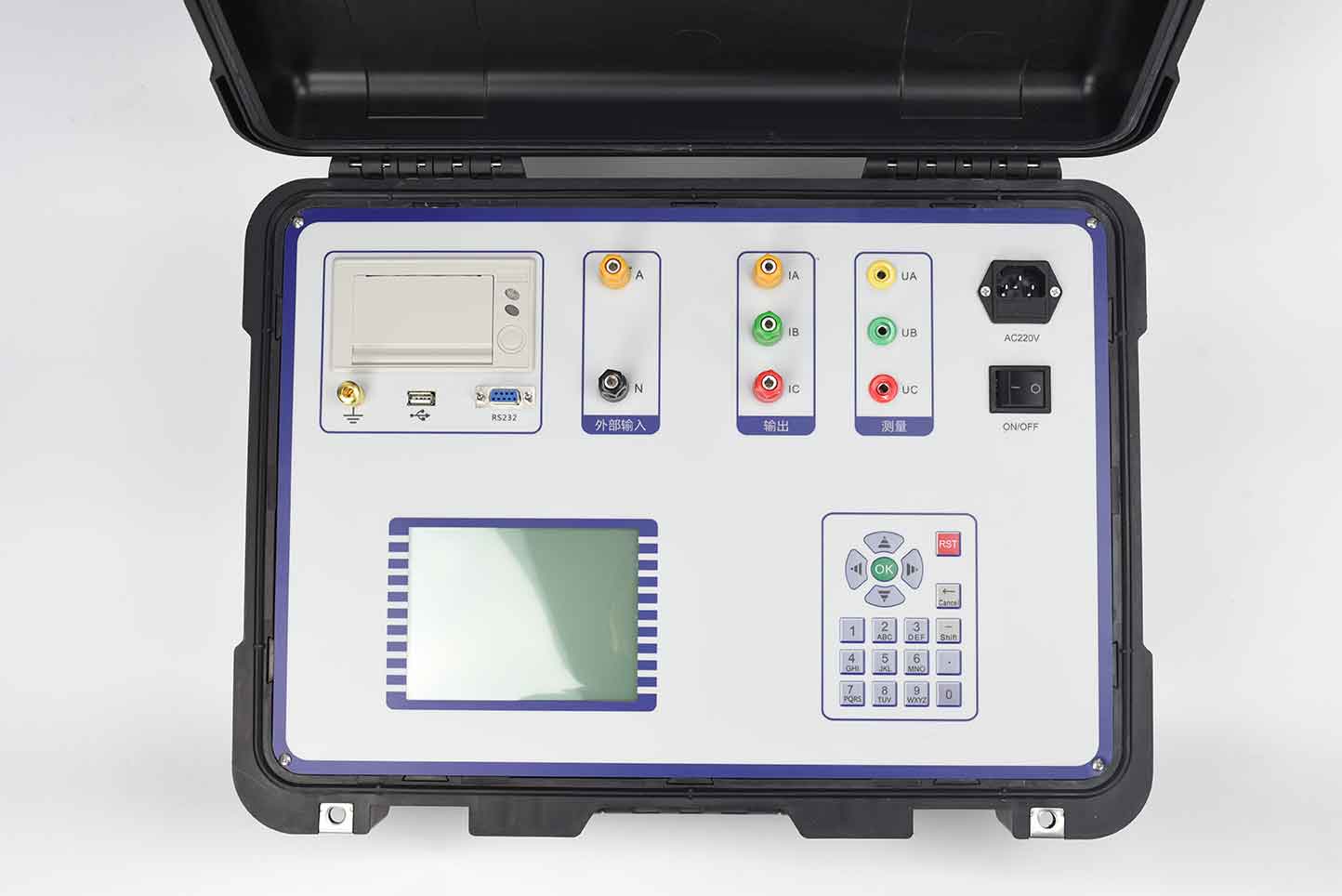
Kvtester Electronics Technology Co.,Ltd. is a high-tech enterprise specializing in power testing, testing, research and development, production, and sales of testing equipment. It has been engaged in the electrical testing industry for many years, and its products are of high quality. We welcome customers to come and purchase. Service hotline: 0086-27-81778799, to learn more, visit the official website: www.kvtester.com