When choosing battery internal resistance testing equipment, you need to consider five core dimensions: accuracy, functionality, applicable scope, ease of operation, and after-sales service. The type of equipment should also be matched to the specific application scenario (such as automotive maintenance, industrial testing, outdoor operations, etc.). Here's a detailed analysis:
1. Accuracy: The cornerstone of data reliability
① High-precision equipment (error ≤ ±1%):
Suitable for scenarios requiring extremely high data accuracy, such as power grid substations and data center backup power supply testing.
② General-purpose equipment (error ±2%~±5%):
Suitable for daily maintenance or scenarios with limited budgets, such as automotive repair shops. This type of equipment can meet basic testing needs, but requires regular calibration to maintain accuracy.
2. Functionality: Meeting diverse testing needs
① Basic functions:
Supports single/multiple cell battery internal resistance and voltage measurement.
② Advanced functions:
Data storage and analysis: Built-in large-capacity storage, supporting the generation of trend reports, such as battery capacity and internal resistance testers that can track battery decay curves.
Over-limit alarm and intelligent diagnosis: Automatically marks abnormal batteries.
Multi-parameter synchronous measurement: Simultaneously detects internal resistance, voltage, and capacity.
3. Applicable Scope: Covering different scenarios and battery types
① Automotive field:
Choose equipment that supports 12V/24V voltage and is lightweight and portable.
② Industrial and energy storage fields:
Requires support for high-voltage, large-capacity battery pack testing.
③ Outdoor operations:
Prioritize equipment that is anti-interference, portable, and durable.
4. Ease of Operation: Improving testing efficiency
① Human-machine interaction design:
Choose equipment with touch screen operation and a clear and easy-to-understand menu.
② Data transmission and sharing:
Supports USB, Bluetooth, or Wi-Fi transmission.
③ Fast testing:
Single battery pack test time ≤ 10 minutes.
5. After-sales service and technical support: Ensuring long-term use
Brand reputation:
Prioritize well-known brands, whose equipment has been market-tested and has a low failure rate.
Warranty policy:
Confirm the warranty period (usually 1-3 years) and the after-sales service response speed. Software Updates:
Select devices that support firmware upgrades, such as smart battery internal resistance testers, which allow for customized updates to the instrument's program according to user needs, extending the device's lifespan.
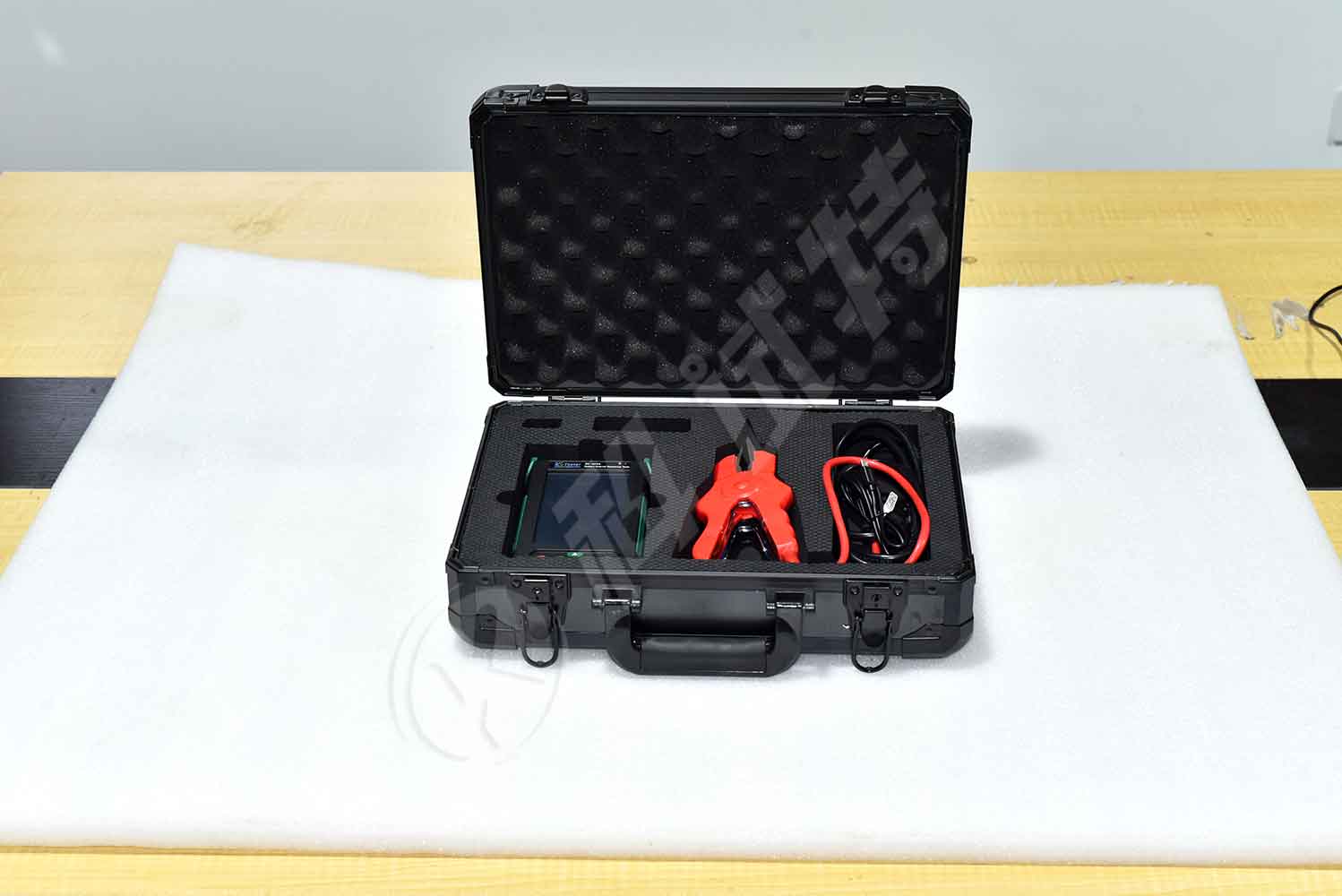
ZC-422A Battery Internal Resistance Tester is designed using the advanced AC discharge measurement method to test voltage, resistance and conduct of cell battery online. It can store , process the detected data and alarm the battery failure. The tester can accurately and effectively discern the condition of cell battery. The instrument saves, queries, deletes and exports the test data. The upper computer software analyzes and displays the test data through various charts and graphs . It automatically generates the battery test report.
Kvtester Electronics Technology Co.,Ltd. is a high-tech enterprise specializing in power testing, testing, research and development, production, and sales of testing equipment. It has been engaged in the electrical testing industry for many years, and its products are of high quality. We welcome customers to come and purchase. Service hotline: 0086-27-81778799, to learn more, visit the official website: www.kvtester.com